PPWR Compliance Starts with The Spec
The EU Packaging and Packaging Waste Regulation (PPWR) is now in effect — and the first compliance deadline is August 2026.
From Declarations of Conformity to PFAS restrictions to recyclability mandates, every PPWR requirement traces back to your specification data. Specright is where that data lives — standardized, supplier-validated, and audit-ready.
What’s At Stake If You’re Not PPWR Ready
Non-compliance with the EU’s Packaging and Packaging Waste Regulation carries real commercial, financial, and operational risk — and August 2026 is only the first wave.
The mandates reshaping how packaging is designed, labeled, and sold continue rolling out through 2027 and beyond, and the risk doesn’t stop once the first deadline passes.
- Market Bans: Products pulled from EU shelves when Declaration of Conformity data is missing or inaccurate
- Heavy Fines: Financial penalties issued per SKU for non-conformance with PPWR requirements
- Recall Costs: Costly recalls triggered by gaps in packaging technical documentation
- Supplier Risk: Restricted substance violations traced back through your packaging supply chain
The Spec-First Foundation for PPWR Compliance
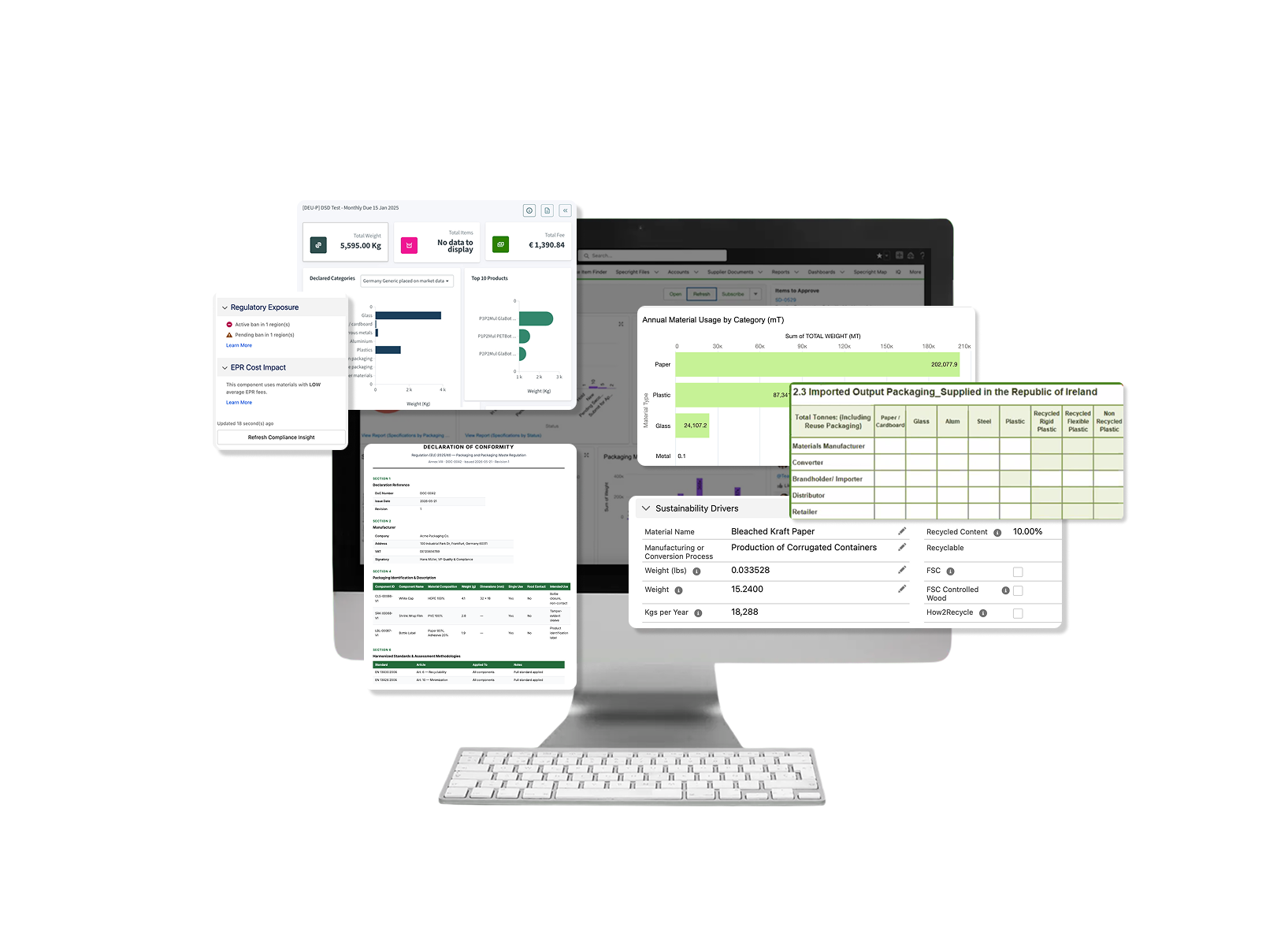
Specright’s Specification Data Management (SDM) platform gives packaging teams a centralized, structured system to collect, standardize, and act on the packaging data required for EU PPWR compliance.
Build A Data Foundation
Replace supplier emails, PDFs, and spreadsheets with structured, component-level data (material type, weight, dimensions, PCR percentage, recyclability) in a single source of truth. Controlled picklists, duplicate detection, and required-field enforcement catch data gaps before submission, not after a regulator flags them. Every PPWR field lives in one place, and every report reflects actual data points, not estimates.
Collect Data From Suppliers
Pull conformity statements, Substances of Concern (SoC) documentation, and origin data directly from suppliers through a dedicated portal. These are the inputs your Declaration of Conformity rests on, captured from one source of truth.
Generate DoCs and Audit Dossiers
Track per-spec readiness against all eight PPWR articles, then roll it up to the finished-good level to generate a signature-ready Declaration of Conformity, EPR reporting, and PFAS documentation — all from the spec data you already manage in Specright. The same foundation drives innovation, surfacing eco-modulation impacts, material recommendations, and design changes that cut fees and improve recyclability — and positions your data for what’s next: DPP, EUDR, and CSRD.
The Impact of Spec-First Compliance
28%
Reduction in annual fees, penalties and fines
44%
Time savings on regulatory reports
15%
Reduction in non-sustainable packaging material usage
25%
Reduction of product and packaging waste
Unilever Prestige Implements Specright Across Enterprise
Unilever Prestige partnered with Specright on a centralized Specification Data Management (SDM) platform system to streamline its fragmented packaging and raw material specifications across 10 luxury beauty brands. The phased implementation across its brands focused on data standardization, regulatory compliance, and sustainability tracking, resulting in significant efficiency improvements and cost savings.

What are the key EU PPWR compliance deadlines?
PPWR requirements phase in over several years. The most urgent deadlines are:
- January 1, 2030 — Ban on non-recyclable packaging; minimum recycled content requirements; reuse targets; SUP format bans take effect
- August 12, 2026 — PPWR enters into force; PFAS ban takes effect; mandatory Declaration of Conformity required; EPR obligations updated
- February 12, 2027 — Restrictions on PRO membership labeling; HORECA refill targets begin
- August 12, 2028 — Mandatory material ID pictograms and DRS labeling on packaging
- January 1, 2029 — Mandatory Deposit Return Systems (DRS) must be established; PCR calculation methods standardized
Who does the EU Packaging and Packaging Waste Regulation apply to?
PPWR applies to any company that places packaged products on the EU market, regardless of where that company is headquartered. This includes brand owners, manufacturers, importers, and distributors selling into EU member states. If your product is sold in Europe, PPWR applies to you.
Does Specright file PPWR or EPR submissions for me?
Specright does not file PPWR or EPR submissions. Specright is the data layer; filing happens through Lorax EPI (via our pre-built connector) or through whichever EPR consultancy or partner you already use.
Specright does generate signature-ready Declarations of Conformity for download and submission.
What is a PPWR Declaration of Conformity?
A Declaration of Conformity (DoC) is a mandatory document in which a company formally declares that its packaging meets PPWR requirements. It must be completed by packaging type and supported by technical documentation and supplier conformity statements for Substances of Concern (SoC). The deadline to have a DoC in place is August 12, 2026 — which means preparation needs to start now.
How is Specright different from a CSRD reporting platform?
Specright is not a CSRD platform; it does not handle double materiality assessments, XBRL tagging, or ESRS report assembly. Instead, Specright is the spec data hub that feeds your CSRD platform’s ESRS E5 disclosures, covering materials, recycled content, recyclability, and packaging waste. One data source powers many downstream reports.
What packaging data does Specright capture for PPWR?
Specright captures material substrate, component weights, dimensions, PCR percentages, recyclability assessments, supplier conformity statements, Substances of Concern (SoC) documentation, and the volume data needed to reconcile against sales by market.