


I remember thinking, “There has to be a better way.”
In my previous role, I was buried in tedious, repetitive work. I spent my days compiling spreadsheets, re-checking data and formulas, and password-protecting everything, just in case. Then I found it: a platform that would get rid of the manual consolidation, validate my data, and automate the calculations and analysis. It almost seemed too good to be true.
I couldn’t wait to take it to leadership. Then came the question every champion eventually hears: “What’s the business case?”
“It would make my life better” wasn’t going to be enough. I needed a thorough analysis that showed what problem the platform would solve and what the company would gain. As excited as I was, it felt like a huge job, and I was already working 50+ hours a week just to keep up. Days turned into weeks, weeks turned into months, and I stayed stuck in spreadsheet purgatory. Without any time to conduct a proper analysis and business case, I was never able to get budget allocation for a tool and was left plugging away status quo processes, which meant me and my team were never able to take on additional strategic projects.
Why I became a value consultant
That experience is the reason I moved into value consulting. I wanted to be the help I didn’t have.
Value consulting goes beyond standard tech implementations—it bridges the gap between software investments and tangible, executive-ready financial outcomes. My job at Specright, is to do the “heavy lifting” on the analysis so you don’t have to build the case alone in your “spare time.” I work with packaging, procurement, R&D teams and more, to measure the problem, put a value on the solution, and walk into the room with the deliverable and talking points you need to get the budget approved. Then you can get back to the work you were hired to do.
A strong business case isn’t a spreadsheet full of assumptions. It translates the pain you deal with every day into an executive-ready story that explains why the project matters, what it’s worth, and what waiting costs the business.
How it works
It takes a few hours of your time, not the months it took me. We usually work through three sessions (more if needed):
- Discovery: Pin down the specific pain points and business issues we’re solving.
- Value: Measure the impact of solving them, along with the risk of keeping the status quo.
- Business case: Build and pressure-test the executive deliverable together, and get you ready to present it.
This isn’t another ROI calculator. It’s a complete business case built on your numbers and written in the language your finance team uses, so your project stands out and gets the attention it deserves from the people who control the budget.
Try this before we talk
Pick one manual task your team does every week, like chasing down spec data, re-keying it into spreadsheets or answering the same supplier questions. Multiply the hours it takes by the number of people doing it, by their loaded hourly rate, and then by 52.
For example: 4 hours a week × 3 people × $65 an hour × 52 weeks = $40,560 a year. That’s the first line of your business case.
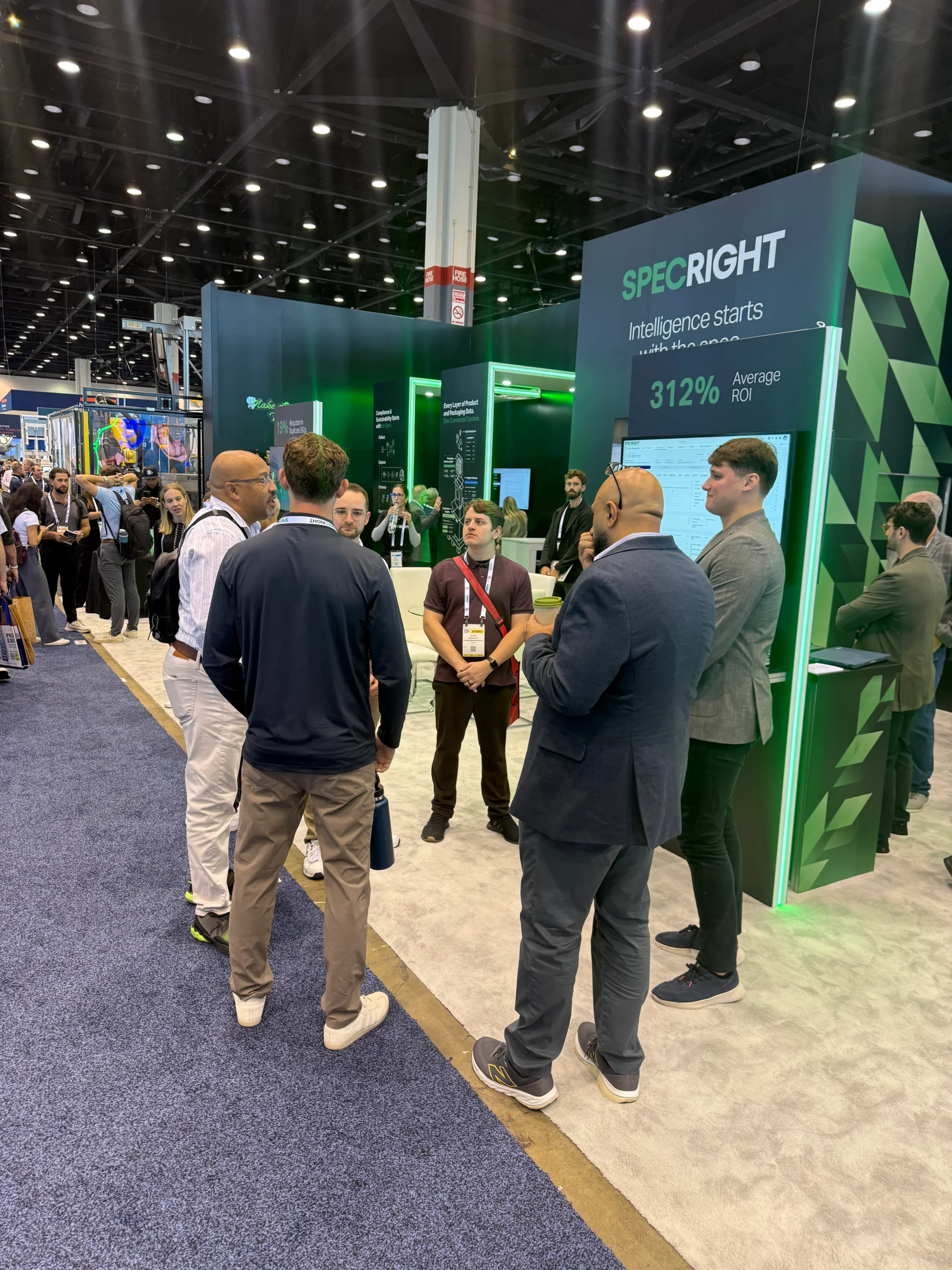
If that number surprises you, you’re not alone. In Specright’s 2026 ROI study, done with the independent research platform UserEvidence, customers reported saving 468 hours a year on core spec management tasks. That’s more than 11 work weeks. They saw an average +300% ROI and earned back their investment in four months.
Those are averages. My job is to help you find your number.
Ready to make your case for change?
If you have a project that could make a real impact and you’re ready to take it to leadership with a case that holds up, contact our team today. We’ll see whether a complimentary value consulting engagement is the right fit.
This is my first blog in a series of blogs around value consulting and helping brands build a case for change. Stay tuned for more content in the weeks ahead!
-

Lisa Davenport
Lisa Davenport (Husken) is Manager of Business Value Consulting at Specright, where she helps enterprise brands put numbers behind their packaging and specification goals, turning what was formerly thought of as a cost center to a pivotal strategic partner. She leads the team that works with customers to assess status quo risk and build executive business cases, turning operational pain points into clear financial outcomes such as cost savings, faster time to market, supply chain resilience, and progress on sustainability goals. Lisa works with C-suite and functional leaders across procurement, packaging, R&D, and sustainability to show the strategic and measurable value of digitizing specification data. Before Specright, she spent five years as a Value Consultant at Kyriba, building ROI cases for treasury and finance leaders. She holds a B.S. in Business Administration from Central Michigan University.
Explore More Blogs
-

What a Value Consultant Actually Does: Building a Case for Change
Read More → : What a Value Consultant Actually Does: Building a Case for Change -

Pack Expo 2026 Recap: 5 Takeaways on AI, EPR Compliance, and Supplier Data
Read More → : Pack Expo 2026 Recap: 5 Takeaways on AI, EPR Compliance, and Supplier Data -

Three Things Most Brands Get Wrong About Ecomodulation
Read More → : Three Things Most Brands Get Wrong About Ecomodulation

Get Started
With Specright’s Solution Suite, you can digitize, centralize, and link your specification data to drive efficiencies, intelligence, traceability, and collaboration within your organization and across your supply chain network.